With May has come the first of a number of big transitions for the Gwinners in Peru.
And this one wasn't even in Peru.
May 15 was the date of Jeremy's college graduation ceremony up in Tacoma, Washington.
Britt, Valerie, and Addison flew up from Lima. Addison was in the midst of IB exams, but luckily had a gap between them that gave him just enough time to fit in the trip to Seattle/Tacoma. It's a long way from Lima, and took us a total of 6 flights, 3 hotels, and 1 car rental. But it was worth it. The weather was glorious. Valerie's mother joined the fun from DC, and we caught up with family in the Tacoma area. We also enjoyed dinners with J's girlfriend and her family.
J. is hunting for an apartment and job in the Tacoma/Seattle area - with promising leads/interviews for jobs through the Americorps program. His goal is to do good. The prospects look promising, even if the salaries are low. Wish him luck. It should be a great ride.
The happy grad, marching in with his class. The tassles are for the major in international political economy and the colorful scarf is for the focus on Latin American studies
Jeanne and Jeremy, post ceremony
The march across the stage as Jeremy's name is called
and he gets a handshake from the president
It was a beautiful day, and sun-deprived coeds lounged in the grass, while the families of the grads took seats in the bleachers and on the lawn to watch the graduation ceremony
The recessional - not as formal as the processional
Addison, Jeremy, Jeremy's grandmother, and Britt
Valerie, Jeremy, Addison in the small campus arboretum
The giant sequoia in the middle of campus is majestic and the college symbol
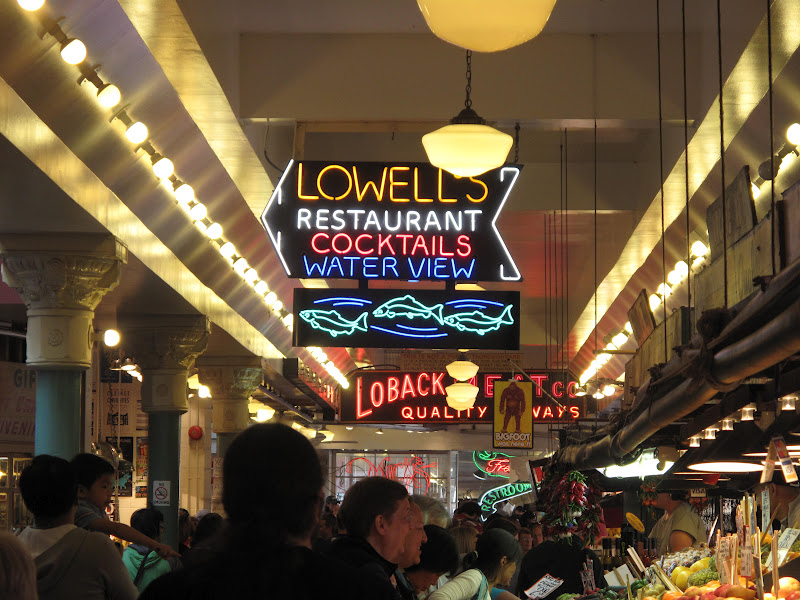
In Pike's Place market
where the fish is giant
enjoying the sun in downtown Seattle
where the produce is as big and spectacular as Lima
driving south to Tacoma, the skies were blue and Mt Rainier was very visible
Dept ceremony for the international political economy majors
Jeremy and Jeanne
Spring on the lovely campus of Univ of Puget Sound
Ceremony for the Latin America Studies grads
On a clear day, you can see Mt Rainier from the campus
Downtown Tacoma with Jeremy and his grandmother
Glass museum
Thumbs up for the Gwinner guys
Walking in the rainforest of Point Defiance
where the rhododendrons were in bloom
Dinner with family overlooking the Tacoma port
Sunday, May 20, 2012
Saturday, April 14, 2012
Easter in the highlands with friends
Three years ago, we spent our first Peruvian Easter holiday in the central highlands of Peru. We stayed in a small city called Jauja at a wonderful B&B called Manco Capek. The owners were not only great hosts, taking us on beautiful hikes and introducing us to hidden treasures of the area, they also became friends. It's also through them that Valerie found her job.
This year was our last Easter in Peru, as we get ready to move to Africa in several months.
We'd planned to spend the 4-day weekend in the high jungle area near San Ramon, Peru, where there is a simple, but lovely ecotourism lodge. The plan was to spend several days there with friends, hiking to hidden waterfalls, admiring the lush jungle vegetation, and listening to the amazing arrays of night sounds after the sun sets.
But violent protests blocked the only road, so we changed course. We ended up taking a very long (over 10 hours) but beautiful side road to Jauja and the Mantaro Valley. It entails heading south along the coastal desert to Canete, then catching the road that heads inland through Lunehuana, then up beyond Yauyos, over a 4,600 meter mountain pass, and through Huancayo to Jauja. From Jauja, we took some breathtakingly pretty hikes through the patchwork quilt of farmer fields. This is the flowering season for potato and mustard. The quinoa and kiwicha are in full color. The wheat is green and soft, and there are wild flowers everywhere. It's spectacular.
We also fit in a day trip to San Ramon to get a small taste of the jungle, which was just gushing with life.
The drive up was long and spectacular. It also included some fun moments, like this drive through the river, where the bridge was out.
This was our picnic spot/stop, with great views and a big rock that was harder to climb up than it looks.
After climbing over a pass at about 4,600 meters, we began the descent through gorgeous highlands toward Huancayo and the Mantaro Valley.
It was chilly, due to the high altitude, but the colors were so remarkable, we stopped several times for photos.
The road was quiet and clear. Though longer than the main road, it was far more bucolic.
These photos are from a hike we took toward some pre-Colombian ruins, and across the patchwork of fields and flowers in the Junin region.
The path was grassy, easy, and very pleasant.
In Peru, the livestock wear earrings.
These fossil seashells are a reminder that once upon a time there was a sea here.
Pre-Colombian doorway
The purple flowers are blooms of wild potatoes.
These little boys followed us throughout our hike, giggling and playing a sort of hide and seek with us. Note in the background how the rainclouds are approaching. We had started the hike in full sun with blue skies, and made it back to the cars just before the downpour really hit.
In the central square of Jauja, local groups create displays made of colored mulch for Easter. You can see similar displays in the nearby town of Tarma, where they are made of flower petals.
We visited this woodworker's shop with a group of friends and purchased an array of masks, bowls, and even one of his old bicycles.
The lilies were in bloom just in time for Easter.
The patchwork of crops includes potatoes, still in purple bloom, along with wheat, mustard, beans, and more.
We chanced upon a herd of wild vicuna. They are camelids, related to llama, but smaller, more graceful, and more rare. Their wool is considered to be finer than alpaca. This group included several juveniles who were romping about.
On the road from Jauja to Tarma, there are fields that get flooded from the rains and reflect the changing skies.
On the way to San Ramon, there is a hill called Pan de Azucar due to its steeply rounded shape.
Britt, under one of many waterfalls on the road to San Ramon.
This is the Tirol Waterfall, near San Ramon. Because it was a holiday weekend, there were lots of locals who hiked up to the water for a swim and shower in the spray. San Ramon is in the high tropical jungle. It's warm and thriving with life.
Valerie is holding a baby two-towed sloth.
This gives you a flavor of the flowers and lush plant life of San Ramon.
Back in the highlands, this was on our way to another lovely hike.
More fields, with purple kiwicha, wheat, potato, and more.
More pre-Colombian ruins - with a view
This year was our last Easter in Peru, as we get ready to move to Africa in several months.
We'd planned to spend the 4-day weekend in the high jungle area near San Ramon, Peru, where there is a simple, but lovely ecotourism lodge. The plan was to spend several days there with friends, hiking to hidden waterfalls, admiring the lush jungle vegetation, and listening to the amazing arrays of night sounds after the sun sets.
But violent protests blocked the only road, so we changed course. We ended up taking a very long (over 10 hours) but beautiful side road to Jauja and the Mantaro Valley. It entails heading south along the coastal desert to Canete, then catching the road that heads inland through Lunehuana, then up beyond Yauyos, over a 4,600 meter mountain pass, and through Huancayo to Jauja. From Jauja, we took some breathtakingly pretty hikes through the patchwork quilt of farmer fields. This is the flowering season for potato and mustard. The quinoa and kiwicha are in full color. The wheat is green and soft, and there are wild flowers everywhere. It's spectacular.
We also fit in a day trip to San Ramon to get a small taste of the jungle, which was just gushing with life.
The drive up was long and spectacular. It also included some fun moments, like this drive through the river, where the bridge was out.
This was our picnic spot/stop, with great views and a big rock that was harder to climb up than it looks.
After climbing over a pass at about 4,600 meters, we began the descent through gorgeous highlands toward Huancayo and the Mantaro Valley.
It was chilly, due to the high altitude, but the colors were so remarkable, we stopped several times for photos.
The road was quiet and clear. Though longer than the main road, it was far more bucolic.
These photos are from a hike we took toward some pre-Colombian ruins, and across the patchwork of fields and flowers in the Junin region.
The path was grassy, easy, and very pleasant.
In Peru, the livestock wear earrings.
These fossil seashells are a reminder that once upon a time there was a sea here.
Pre-Colombian doorway
The purple flowers are blooms of wild potatoes.
These little boys followed us throughout our hike, giggling and playing a sort of hide and seek with us. Note in the background how the rainclouds are approaching. We had started the hike in full sun with blue skies, and made it back to the cars just before the downpour really hit.
In the central square of Jauja, local groups create displays made of colored mulch for Easter. You can see similar displays in the nearby town of Tarma, where they are made of flower petals.
We visited this woodworker's shop with a group of friends and purchased an array of masks, bowls, and even one of his old bicycles.
The lilies were in bloom just in time for Easter.
The patchwork of crops includes potatoes, still in purple bloom, along with wheat, mustard, beans, and more.
We chanced upon a herd of wild vicuna. They are camelids, related to llama, but smaller, more graceful, and more rare. Their wool is considered to be finer than alpaca. This group included several juveniles who were romping about.
On the road from Jauja to Tarma, there are fields that get flooded from the rains and reflect the changing skies.
On the way to San Ramon, there is a hill called Pan de Azucar due to its steeply rounded shape.
Britt, under one of many waterfalls on the road to San Ramon.
This is the Tirol Waterfall, near San Ramon. Because it was a holiday weekend, there were lots of locals who hiked up to the water for a swim and shower in the spray. San Ramon is in the high tropical jungle. It's warm and thriving with life.
Valerie is holding a baby two-towed sloth.
This gives you a flavor of the flowers and lush plant life of San Ramon.
Back in the highlands, this was on our way to another lovely hike.
More fields, with purple kiwicha, wheat, potato, and more.
More pre-Colombian ruins - with a view
Subscribe to:
Posts (Atom)